Full article about Lis Breeze & Apple Blossoms in Marrazes e Barosa
Whitewashed villages, clay-scented lanes and azulejo-clad churches knit city and orchard plain
Hide article Read full article
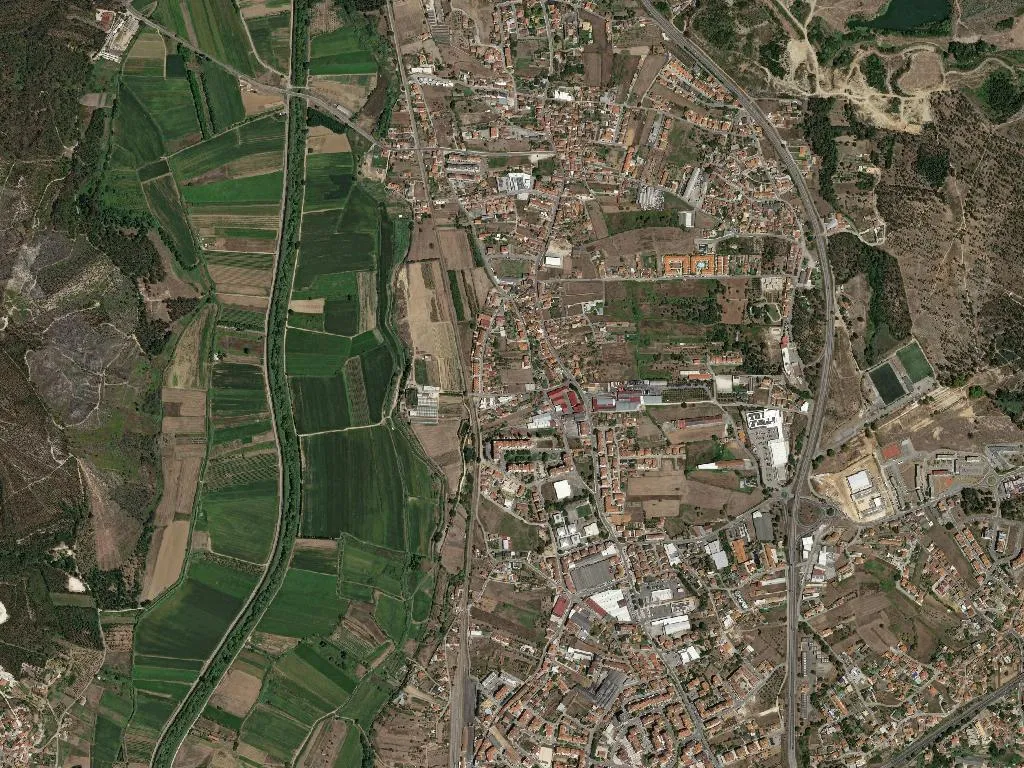
The air smells of freshly-turned earth and, beneath it, something more elusive—the resin of coastal pine forests warmed by a sun that still hasn’t chosen between summer and autumn. Along the Ribeiro de Marrazes the water slides low between reeds and moss-slick stones, its murmur braided with the hum of orchard bees. We are only thirty-two metres above sea level, on a plain so level the horizon blurs, yet more than 26,000 people live here—in schoolyards, in cafés, between rows of Royal Gala. This is not the remote interior; it is a permeable membrane between the city of Leiria and the green that refuses to surrender.
Stone, clay and Moorish memory
The toponymy gives it away: Marrazes, from the Arabic Marraçes, signals an agricultural estate that predated Portugal itself. In 1179 Afonso Henriques granted the settlement its first royal charter, the name inked onto parchment. Barosa comes from the Latin Barrosa—the dark, clingy clay that once coated the hands of potters. An administrative merger in 2013 stitched the two parishes together, yet identities remain distinct. Cross the Barosa bridge—its granite arches scalloped by water and centuries of footsteps—and the palette shifts: stone grows rougher, lichens yellow, the air smells of wet terracotta even on dry days.
Napoleonic troop movements left scars the documents record but the landscape has absorbed. What endures are 18th- and 19th-century landmarks: Marrazes’ parish church, where blue-and-white azulejos flake in silence; the tiny Chapel of São Sebastião, its low door groaning on leather hinges; Barosa’s church, whose gilded baroque retable catches late light and throws it back in warm shards onto the nave. Nine classified heritage assets—four National Monuments, three of Public Interest—cluster within a few square kilometres, an inventory that startles anyone expecting only apple orchards.
Manor houses that still smell of profit
Scattered among vegetable plots and umbrella-pine stands, 19th-century quintas recount an era when this soil paid dividends. Quinta do Pinheiro and Quinta da Barroca rise in lime-washed stucco, wrought-iron gates ajar, gardens where magnolias have outgrown their original blueprint. In the 20th century cork took over—factories now shuttered, their brick-and-zinc silhouettes still punctuating the orchards like industrial ghosts. Walk a lane hemmed by ivy-covered walls and the ground changes underfoot: beaten earth gives way to uneven cobbles where, a century ago, estate owners tallied apple crates brought by ox cart.
Apples, pears and mountain honey
Mention Marrazes-Barosa without mentioning harvest is to describe the Atlantic and forget salt. The clay-loam basin of the Lis River gives IGP Maçã de Alcobaça and PDO Pêra Rocha do Oeste exactly what they want: moisture-retentive soil, reliable irrigation, long hours of light. At Saturday’s market the fruit wears actual sun-spots, not supermarket varnish. PDO honey from the Lousã range drifts west on the same prevailing breeze that carries Atlantic cloud; it sweetens trouxas de ovos and pastéis de Santa Clara, convent pastries that migrated to village bakeries centuries ago. On lunch menus lamb stew competes with chanfana—goat braised in red wine—while sopa de pedra, a stone-soup of beans and cured meats, acts as a manifesto: create abundance from thrift, as long as the thrift is honest.
Scallop shells in the pocket, clay on the boots
Two Santiago routes bisect the parish—the Coastal Way and the Torres Way—so hikers in quick-dry trousers share irrigation tracks with tractors. The terrain is mercifully flat; logistics amount to carrying enough water for 8 km between cafés. Those who want limestone drama can head north-east to the Serra de Aire e Candeeiros, where everything turns vertical and alabaster. Return at dusk and the plain reasserts itself: air thickens with vegetal warmth, cicadas replace café clatter.
Twenty-seven accommodation options—ranging from cottage rentals to B&B rooms—absorb visitors without fuss. No queues, no wristbands. Local associations sustain social fabric with the same tenacity that olive roots grip the clay.
The last sound before silence
Evening slants through the pines, whitewash glows amber, and the bell in Marrazes tower fires two dry notes that skate across the plain toward the Lis. After that, only the stream—a hush so persistent it feels like silence itself. You leave carrying that hush, the way clay clings to a boot-sole: damp, dense, impossible to shake off entirely.